class g airspace uk
This autonomy is a fundamental concept within Class G operations. London TMA Terminal Manoeuvring Area VFR flight not permitted unless any local agreements on which you must be briefed Class B none in UK Class C airspace in the UK extends from Flight Level FL 195 19500 feet to FL 660 66000 feet.

Drone Guide To Understanding Airspace
In air traffic management.
. Questions - Class A airspace in UK for GA - Hi guys About week ago I was flying from Ostend to Sothend on PA28. There is an ongoing need to identify and conduct the work required to enable the continued evolution of UK Class G Airspace and operations within it. Class G airspace extends from the surface to the base of the overlying Class E airspace.
All remaining airspace comprising by far the largest part of the airspace below FL 195. It extends from the surface to the base of the overlying Class E airspace. East of the Mississippi River Class G airspace extends up to 1200 feet AGLabove ground level unless otherwise charted.
The notified airspace requirements are set out in UK AIP GEN 15 para 53 in the table under 5313. The aircraft we see in our skies are using an intricate and highly structured route network which keeps us safe as we fly from A to B from the moment we take off to touchdown at our destination. In the airspace highlighted below Class E starts at 1200 AGL so Class G automatically starts at the surface and extends to - but doesnt include - 1200 AGL.
Pilots of military aircraft are warned that there are additional airspace restrictions applicable to them which are not shown on this chart. In class G ie. Pilots are free to fly when and where they wish within laws and reason.
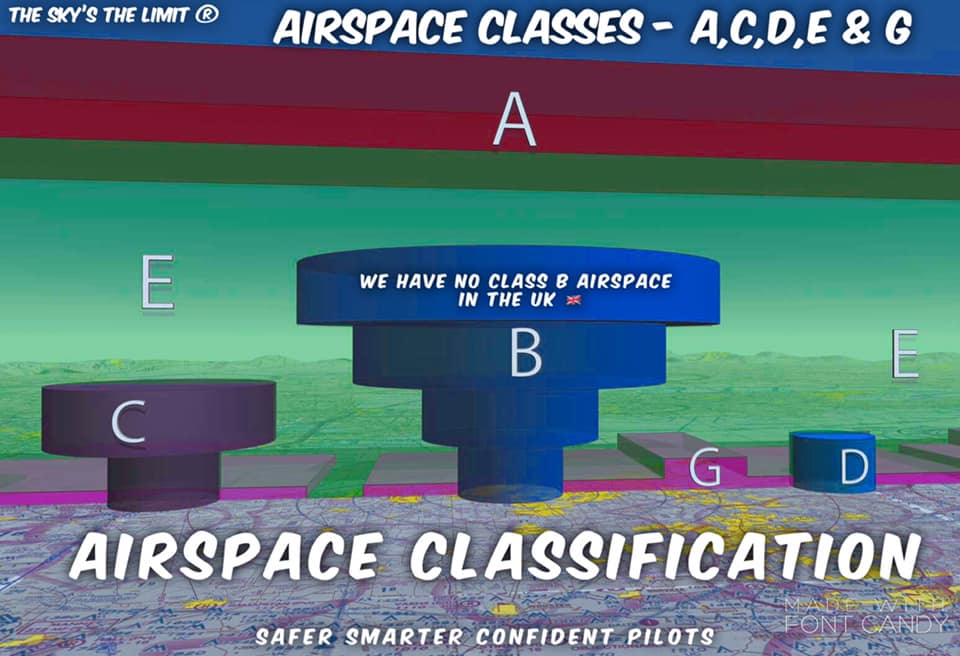
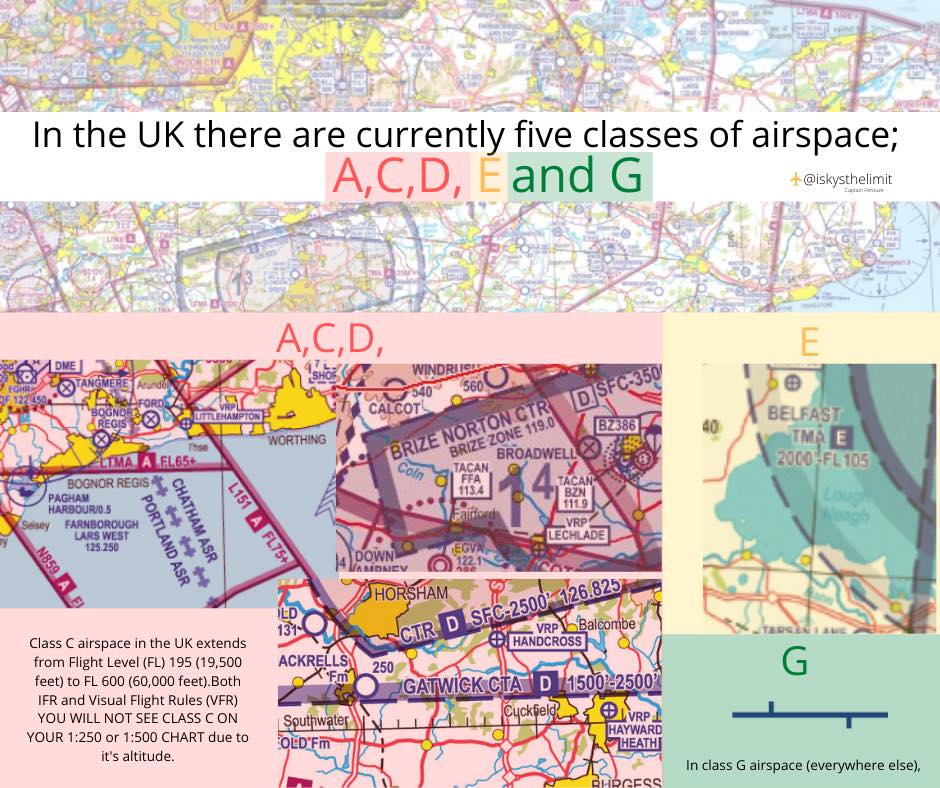
In the UK there are currently five classes of airspace. Classes A C D E are controlled Class G is uncontrolled. Class G airspace is uncontrolled airspace that has not been designated as Class A B C D or E.
The ATS are intended to cater for a wide variety of airspace users and aerial tasks and it is the pilot of an aircraft who must. Classes A C D and E are areas of controlled airspace and G is uncontrolled airspace. It is therefore designated as uncontrolled airspace.
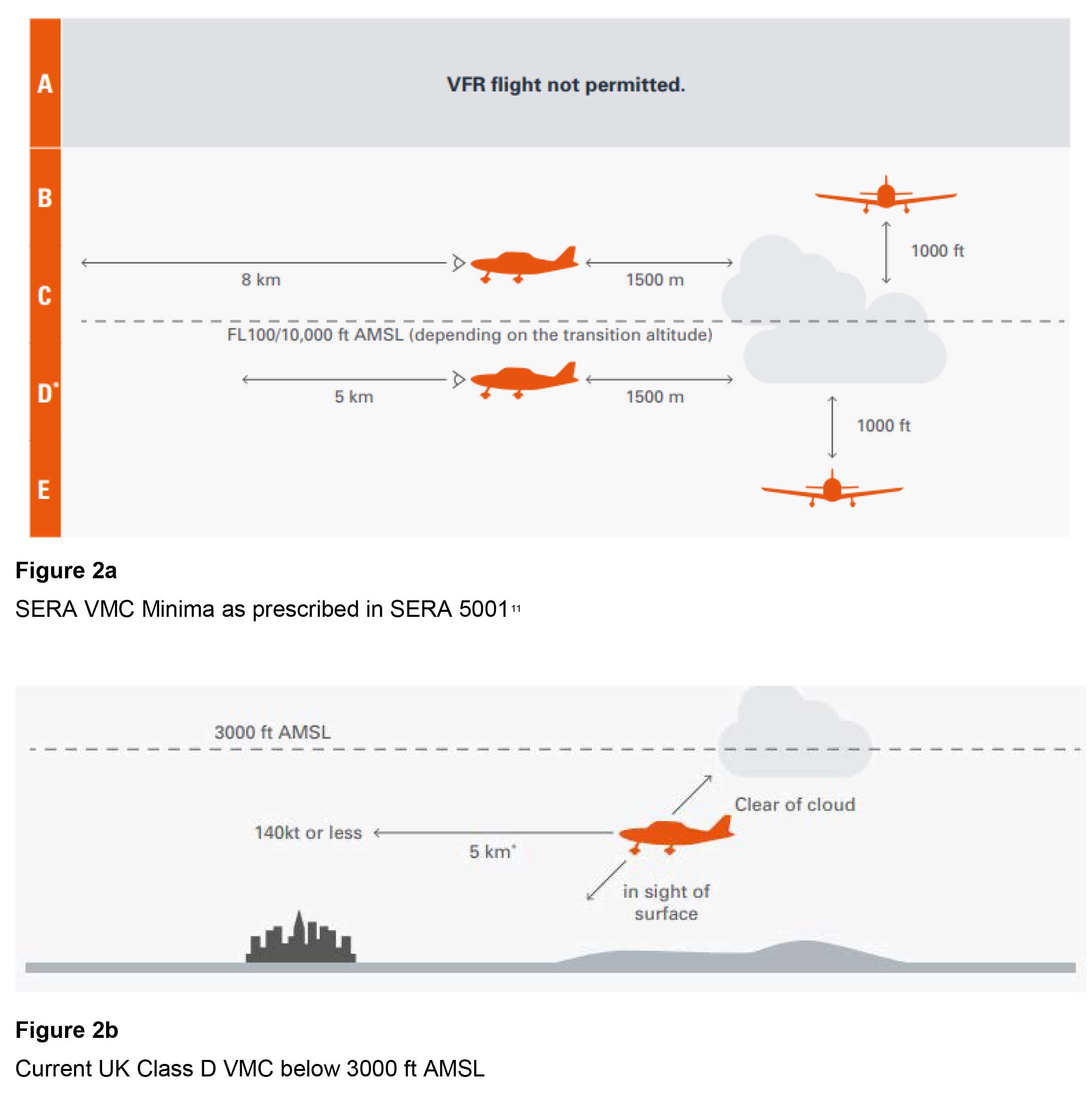
All was as planned but later London Info urged us to. Weather Requirements Class G minimum weather requirements exist so that you can see and avoid other aircraft and stay out of the clouds. The least restrictive airspace classification applied to all other airspace.
Those parts of the Channel Islands TMA North which lie within the London FIR and are located below the lower limits of the Berry Head and Portsmouth CTAs are notified as Class G Airspace. Boundaries of Class G Airspace. Special Use and Other Airspace Classes Special Use Airspace SUA is a designated area in which activities must be confined because of their nature where limitations may be imposed upon aircraft not part of those activities or both.
Whilst an Air Traffic Service may be available in Class G airspace it is not mandated. This airspace is usually well away from licensed Aerodromes and busy flight paths. This is the only uncontrolled airspace in the UK.
In the UK there are currently five classes of airspace. Classes A C D E are Controlled Airspace whilst for Classes F G Airspace the UK has registered differences from the ICAO Standard so as to allow greater flexibility to VFR flights at and below 3000ft amsl and to allow IFR flight in this airspace without the requirement to carry a radio. The UK is unusual in that it has not adopted a widespread class E system of airways for most airspace lower than FL 70.
No airspace is designated Class B in the UK. Volume of Class G airspace available are not known. NATS is the custodian of UK airspace managing the invisible infrastructure that helps a wide range of airspace users to fly safely.
Uncontrolled airspace there are currently no restrictions on. These are contained in RAF Flight Information Publication-PLANNING-Section. Classes E and G.
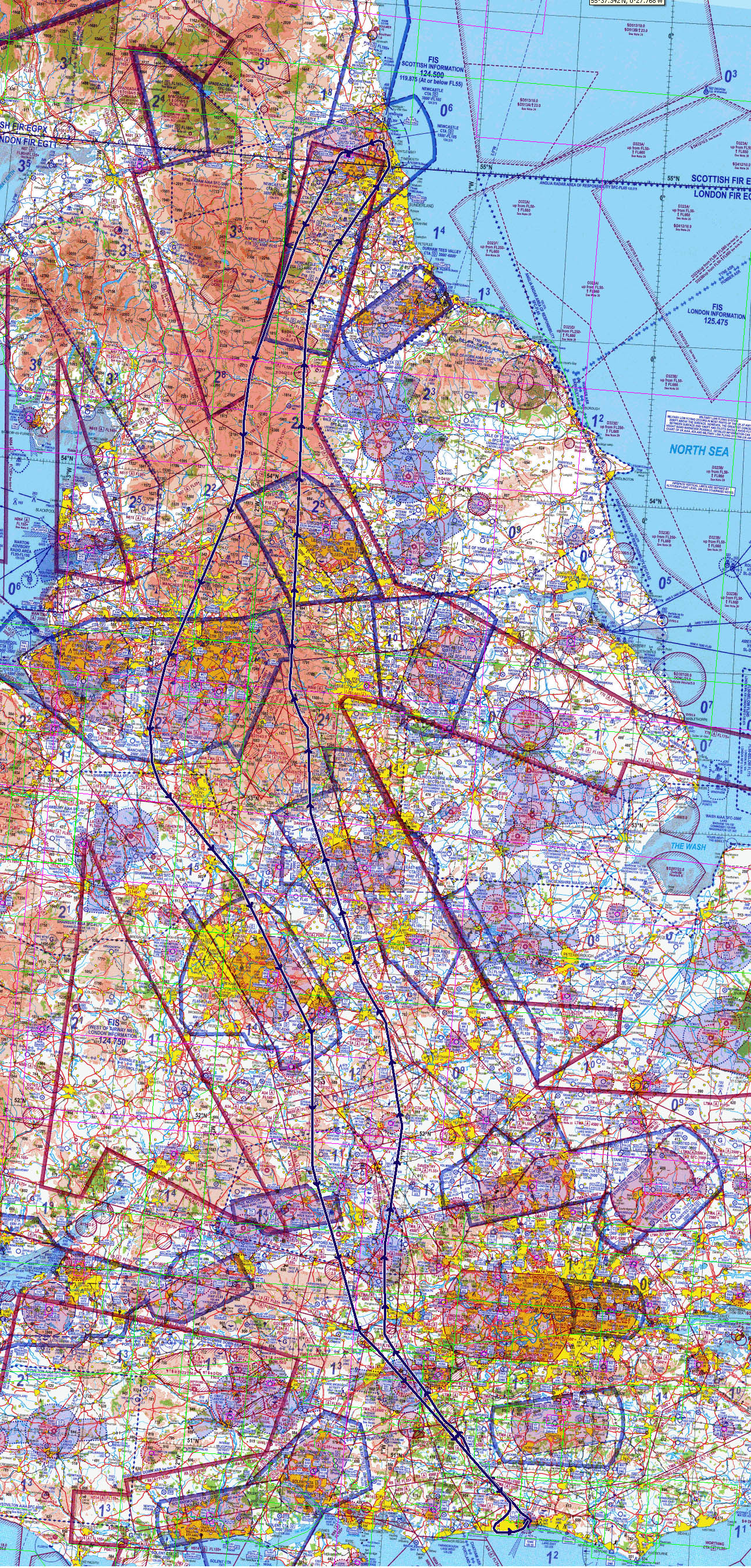
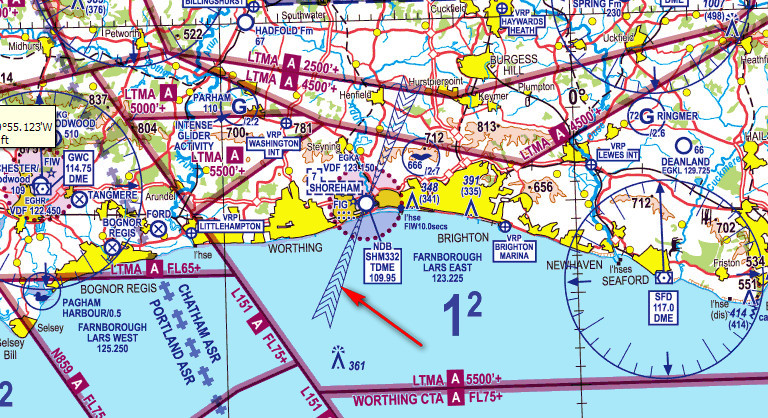
Class G Airspace. Only selected airspace up to FL245 is depicted on this chart. Class A eg.
The UK FIS comprise the following ATS. ACD E and G. Class G airspace is the portion of the airspace that has not been designated as Class A B C D or E.
They still have to adhere to what is know as VFR Visual Flight Rules just like cars have to adhere to the Hightway Code aviation has their own code called VFR. At airports without a 24-hour control tower Class D airspace usually reverts to E when the tower is closed. Typically Class G airspace includes all of the airspace below 14500 ft.
It makes up a large portion of the country. The classification of the airspace determines the flight rules which apply and the minimum air traffic services which are to be provided to those with transponders and radio contact. Most of this airspace is confined to small areas around uncontrolled airports between 700ft AGL and 1200ft AGL.
UK Civil Aviation Authority Statement. Generally Class G airspace extends up to the floor of Class E airspace up to 14500ft MSL. Around most airports which do not have a control tower Class G goes only to 700 feet AGL.
S11 Class G airspace in the UK continues to evolve and contain a very broad range of activity from Commercial Air Transport to high energy military to all types of sport and recreational flying. Changes to this chart will be notified by amendments to the UK AIP. Therefore for light aircraft.
CAA and FAA joint statement on supporting the future of eVTOL. Category G airspace is everything else that isnt AC D E and means that the air is uncontrolled formally and pilots can fly there without having to obtain any Air Traffic Control permissions. Of note is the requirement d that all aircraft operating under VFR within United Kingdom airspace at and above FL 100 require Mode S Elementary Surveillance.
Londons busy airspace contains all three of the UK controlled classes. UK Flight Information Services UK FIS which explains in detail the ATS available in Class G airspace and where specified Class E airspace. That is not otherwise designated Class B C or D airspace.
During crossing FIR boundary at FL 60 we were transferred to London information. Weather condition was IMC so we were forced to file an IFR flight plan. Although ATC has no authority or responsibility to control the ATC pilots should remember there are visual flight rules minimums which apply to.
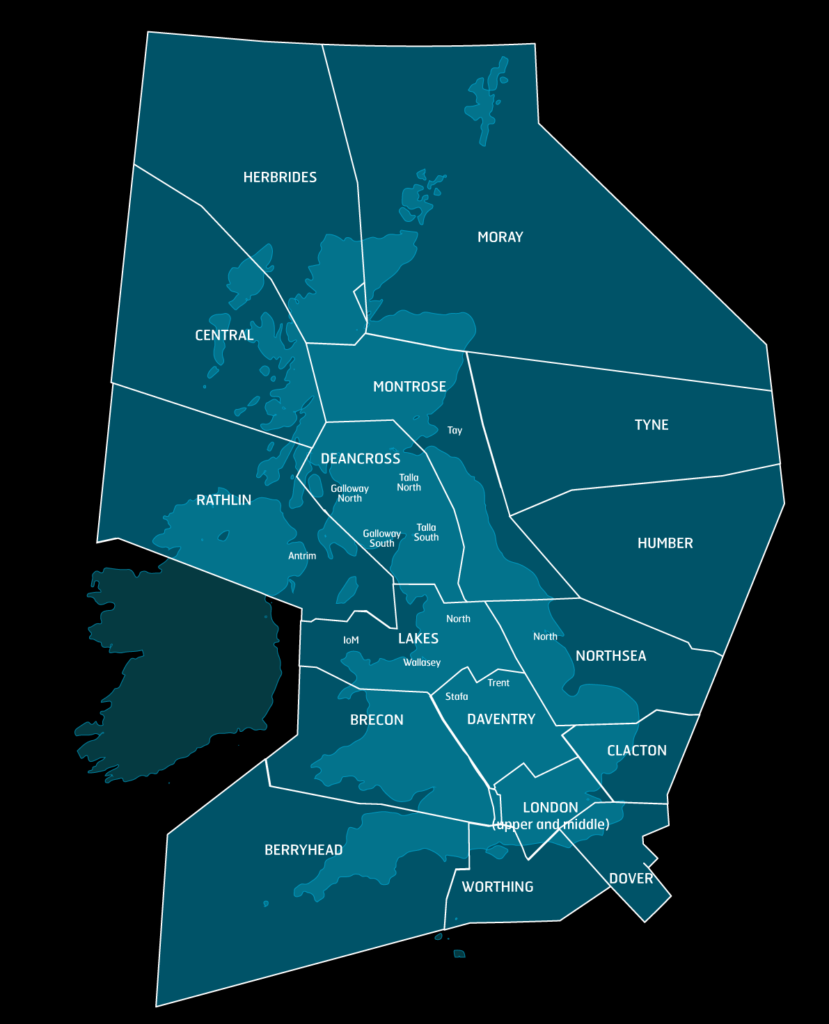
The classification of the airspace within a FIR determines the flight rules which apply and the minimum air traffic services which are to be provided. More information on airspace classifications can be found in the CAA policy statement The Application of ICAO Airspace Classifications in UK Flight Information Regions4 16. Those parts of the Channel Islands TMA South which lie within the Brest FIR are notified as Class E Airspace and are controlled by Brest ACC.
The 5 Classes and what they look like on a chart. Anecdotally there appears to be more controlled airspace but objective evidence was not available.
Introduction To Airspace The Sky S The Limit Facebook

The Hidden Secrets Of Uk Airspace Airspace Classifications Nats Blog
What Is Class E And G Airspace Quora

Uk Airspace Classes And What They Look Like On A Chart General Paramotor Discussion Www Paramotorclub Org

Air Traffic Control Is It Required For Pilots To Contact Atc While Flying Vfr Aviation Stack Exchange

Airspace Class Wikiwand

Uk Airspace Classes And What They Look Like On A Chart General Paramotor Discussion Www Paramotorclub Org

The Hidden Secrets Of Uk Airspace Airspace Classifications Nats Blog
Trip To Newcastle January 2011
Introduction To Airspace Nats

Uk Airspace Classes And What They Look Like On A Chart General Paramotor Discussion Www Paramotorclub Org

Introduction To Airspace Nats

Uk Airspace Classes And What They Look Like On A Chart General Paramotor Discussion Www Paramotorclub Org

The Hidden Secrets Of Uk Airspace Airspace Classifications Nats Blog
Changes To Vfr In Class D Airspace Deeply Flawed Flyer

Airspace Classifications Student Pilot Guide
Flying Interaction With Atc In Class G Airspace
The Sky S The Limit The Sky S The Limit Uk Airspace The 5 Classes And What They Look Like On A Chart Safer Smarter Confident Pilots In The Uk There Are

Class G Airspace Everybody Struggles With This One Online Ground School Youtube